Women with dense breasts could benefit from an advanced cancer screening procedure called molecular breast imaging (MBI), a new study says.
The procedure more than doubled the detection of advanced breast cancers when combined with 3D mammography, researchers reported Sept. 23 in the journal Radiology.
“MBI detected an additional 6.7 cancers per 1,000 screenings at year one and an additional 3.5 cancers per 1,000 screenings at year two,” said lead researcher Carrie Hruska, a professor of medical physics at the Mayo Clinic in Rochester, Minn.
“Among the incremental cancers detected only by MBI, 70% were found to be invasive,” she added in a news release.
In molecular breast imaging, doctors inject a radioactive tracer dye into a woman’s body. This tracer lights up fast-growing cancer cells in breast tissue when observed through imaging equipment.
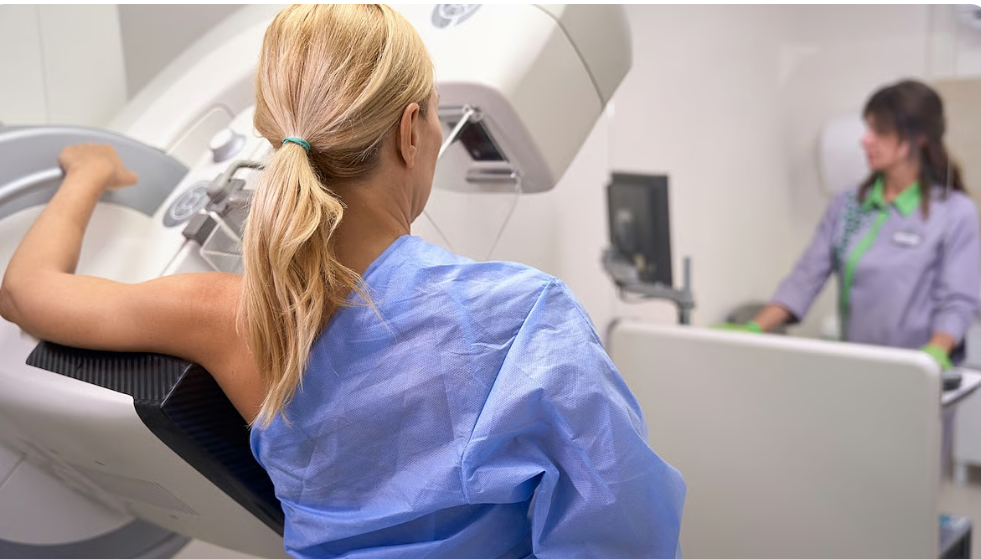
For this study, researchers combined MBI with 3D mammography, in which multiple X-ray images are taken from different angles to create a three-dimensional reconstruction of a woman’s breast. Another name for 3D mammography is digital breast tomosynthesis, or DBT.
“To our knowledge, this is the first multicenter, prospective evaluation of MBI as a supplement to DBT in women with dense breasts,” Hruska said.
An estimated 47% of women who undergo breast cancer screening have dense breasts, researchers said in background notes.
The team recruited nearly 3,000 women with dense breasts, who had an average age of 57. In all, 80% had no family history of breast cancer.
The women, enrolled between 2017 and 2022, underwent two years of annual screening with combined MBI and 3D mammography, researchers said.
Across both years, 30 breast cancers were detected in 29 women by MBI only, and were not found with 3D mammography, results showed. About 7 in 10 (71%) of those cancers were invasive.
“Someone who’s having their routine annual screen every year should not be diagnosed with advanced breast cancer,” Hruska said. “That’s just unacceptable.
Overall, the addition of MBI to 3D mammography increased detection of invasive breast cancer by 2.5-fold, researchers concluded.
“I don’t want to discourage anyone from getting a mammogram, because they absolutely should,” Hruska said. “However, DBT doesn’t find all cancers, and women need to understand its limitations and consider how supplemental screening can fill the gap.”
Hruska added that MBI is considered safe for routine screening, is well-tolerated by patients and is relatively inexpensive.
“MBI uses a well-established radiotracer that’s been used in cardiac imaging for a really long time,” she said. “It has fewer risks than other modalities and no contrast reactions.”
Women need to understand the pros and cons of each method, she added.
“If a woman has a choice of modalities, it’s important that she understands the benefits and risks of each and be involved in the decision-making,” Hruska said.
1. What Are Dense Breasts?
- Dense breasts have higher amounts of fibrous and glandular tissue compared to fatty tissue.
- On a mammogram, dense tissue appears white, which can hide tumors because they also appear white.
- About 40–50% of women have dense breasts, and density can change with age, hormones, and genetics.
2. Why Dense Breasts Increase Cancer Risk
- Dense breast tissue is not just a detection challenge—it is also an independent risk factor for developing breast cancer.
- Women with extremely dense breasts can have 4–6 times higher risk compared to women with mostly fatty breasts.
3. Limitations of Traditional Mammograms
- Standard 2D mammograms may miss small tumors in dense tissue.
- Dense breasts can lead to false negatives, delaying early diagnosis.
- This is why supplemental imaging is crucial for accurate detection.
4. Advanced Screening Procedures
a) 3D Mammography (Digital Breast Tomosynthesis)
- Takes multiple X-ray images to create a 3D view of the breast.
- Can detect tumors hidden in dense tissue better than standard 2D mammograms.
- Reduces false positives and unnecessary callbacks.
b) Breast MRI (Magnetic Resonance Imaging)
- Recommended for high-risk women, including those with dense breasts.
- Uses magnetic fields and contrast agents to detect small tumors.
- Extremely sensitive, often used in combination with mammography.
c) Ultrasound Screening
- Can detect small, non-calcified tumors that mammograms might miss.
- Often used as a follow-up when mammogram results are unclear.
5. Benefits of Early Detection
- Advanced screenings increase the chance of detecting cancer before it spreads, improving survival rates.
- Reduces the need for aggressive treatments like chemotherapy or mastectomy.
- Empowers women to make informed health decisions.
6. Expert Recommendations
- Women with dense breasts should discuss supplemental screening with their healthcare provider.
- Screening frequency may be adjusted based on age, family history, and breast density.
- Some states in the U.S. require mammography centers to notify women about breast density.
7. Lifestyle and Preventive Measures
- Maintain a healthy diet, exercise regularly, and limit alcohol consumption.
- Be aware of personal risk factors like family history and genetic mutations (BRCA1/2).
- Regular clinical breast exams and self-exams complement imaging.
8. Emerging Technologies
- AI-assisted mammography is being used to improve detection in dense breasts.
- Molecular breast imaging and contrast-enhanced mammography are also showing promise.
Sources
- Radiological Society of North America, news release, Sept. 23, 2025
Disclaimer: Statistical data in medical articles provide general trends and do not pertain to individuals. Individual factors can vary greatly. Always seek personalized medical advice for individual healthcare decisions.
About the Author